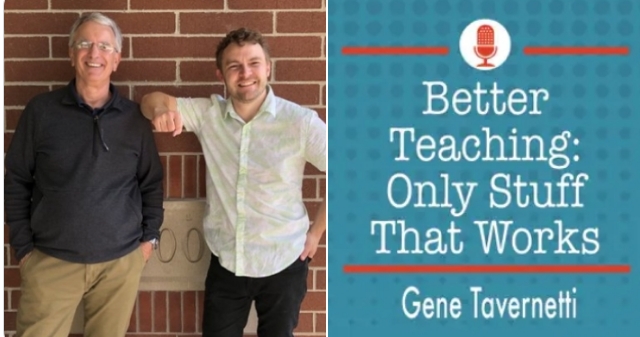
The “Thinking Out Loud” episodes on Better Teaching: Only Stuff That Works are a running set of conversations to make sense of instruction, coaching, and implementation as they actually function in schools—not as we wish they did. The premise is straightforward: Gene Tavernetti and I take a concrete problem of practice, name what tends to go wrong, and work toward clearer thinking and more usable actions for teachers, coaches, and leaders.
This series is also personal for me in a way I don’t mind saying out loud. Gene is a friend, but he’s also been a mentor—someone who has shaped how I think about effective teaching, how I diagnose instructional problems, and how I approach consulting work with schools. If my work has become clearer and more disciplined over time, a meaningful share of that is because of his influence.
My hope is that these summaries give you an efficient way to decide which episodes to start with—and to surface the recurring themes that connect them: precision, practice, observation that actually produces insight, coaching structures that reduce friction, and the kind of implementation thinking that holds up outside of ideal conditions.
Thinking Out Loud with Zach Groshell — October 9, 2024
This is the kickoff. We start by thinking out loud about Direct Instruction (DI), explicit teaching, and what gets lost when people treat “explicit instruction” like a buzzword instead of a craft. It’s a wide-ranging, foundational conversation that sets the tone for the whole series: precise language, fast-paced teaching, and coaching that supports real performance—not just good intentions.
Rehearsal & Instructional Coaching — December 4, 2024
We dig into rehearsal as a missing “bridge” between professional development and actual classroom change. If teachers only talk about strategies (or just watch someone else do them), transfer is shaky. Rehearsal—paired with feedback—helps convert ideas into actions teachers can reliably pull off with students.
Pros and Cons of Coaching Models — February 12, 2025
This episode is all about tradeoffs: full-time coaches vs. hybrid models, centralized vs. distributed support, and why “best model” depends on context (time, staffing, trust, leadership clarity). The through-line is practicality—how to choose a structure that supports teachers without turning coaching into another layer of friction.
Coaching Moves While Observing Lessons — March 19, 2025
We zoom in on what coaches actually do during observations. Observation isn’t passive—what you attend to, how you collect evidence, and how you frame what you saw all shape whether the debrief becomes helpful (or demoralizing). It’s a nuts-and-bolts episode about noticing, interpreting, and choosing next steps with care.
Should the Best Teachers Be Coaches? — May 7, 2025
We take on a classic staffing dilemma: pulling great teachers out of classrooms can hurt students—but schools also need credible, skilled coaches. We talk through the opportunity costs, why great teaching doesn’t automatically equal great coaching, and how to think about pathways that strengthen coaching without draining classrooms of their strongest practitioners.
Coaching Cycles — June 18, 2025
This episode defines what coaching cycles are for and when they’re worth doing. We talk about the purpose (not just the steps), how long cycles should last, and when cycles become bureaucracy. The emphasis is on making cycles serve teacher growth—rather than turning them into a compliance routine.
Lessons from Consulting — October 1, 2025
Here I reflect on what consulting teaches you about implementation and change: what leaders think they want vs. what will actually move practice, why “big splash” training often fades, and why alignment and follow-through matter more than inspiration. It’s a practical conversation for anyone trying to move a system—not just an individual teacher.
Providing Support to Teachers — November 26, 2025
This one is about starting well: how you begin supporting teachers in a way that’s credible, helpful, and sustainable. We talk through what it means to enter support work with clarity and humility, and how to structure early moves so teachers feel helped (not judged) and the work can actually stick.
Discover more from Education Rickshaw
Subscribe to get the latest posts sent to your email.


 Education Rickshaw