In one of my more popular posts, I argued that we need to do better than just nod politely at Direct Instruction (DI).
Cognitive Load Theory is honored through DI’s ruthless efficiency: every word is deliberate, every example intentional, every new piece of content layered step by step to keep working memory clear and focused. Instead of throwing kids into the deep end and hoping for the best, DI makes sure the pool has steps, a rail, and a swim coach who makes learning feel effortless. Nothing extra, nothing distracting—just the right sequence to keep attention on the learning, not on deciphering what the teacher meant to say.
But DI doesn’t stop there. What researchers call “Desirable Difficulties” are baked into its very design: review cycles, cumulative practice, retrieval woven into every lesson, and error correction that doubles as feedback and reinforcement. The much-touted benefits of spaced repetition and interleaving aren’t afterthoughts—they’re engineered and field tested!
Which is why it’s maddening that so few acknowledge DI has been operationalizing the science of learning for decades. Direct Instruction is where cognitive science comes off the page and into the classroom: structured, sequenced, and unapologetically effective.

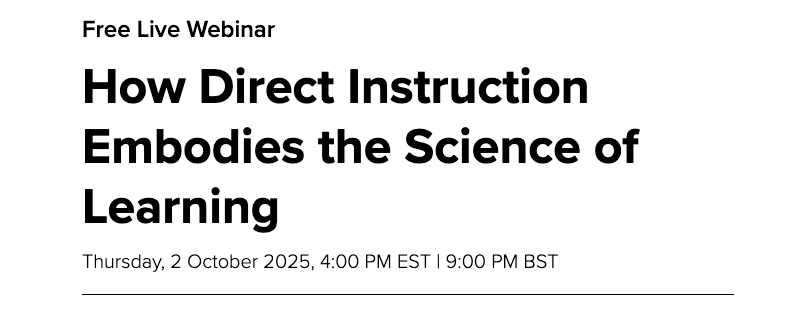
Free Webinar
That’s why I’m so excited to be hosting a free live webinar titled How Direct Instruction Embodies the Science of Learning, where we’ll dig deeper into how DI operationalizes principles like cognitive load management, mastery-based pacing, and built-in retrieval and interleaving.
Join me on Thursday, October 2, 2025, at 4:00 PM ET to explore the evidence and classroom strategies that bring DI alive. You can see all the details and register at the link below — I hope you’ll join us.
Discover more from Education Rickshaw
Subscribe to get the latest posts sent to your email.


 Education Rickshaw
You must be logged in to post a comment.