
Every once in a while, I get asked some version of: “Zach, what’s with your titles?”
Progressively Incorrect? Education Rickshaw? Just Tell Them?
Let me take a moment to unpack the chaotic branding I’ve cobbled together over the years— each name basically a timestamp from a different era of my teaching life, rooted in references that made perfect sense to me at the time, even if they now require some explanation.
Progressively Incorrect
Let’s start with my podcast. People hear Progressively Incorrect and assume I’m about to wade into partisan politics. I’m not. The word progressive has a much different meaning in education—think John Dewey and the Progressive Era of schooling:
“The history of educational theory is marked by opposition between the idea that education is development from within and that it is formation from without; that it is based upon natural endowments and that education is a process of overcoming natural inclinations and substituting in their place habits acquired under external pressure.”
—Dewey, Experience and Education, p. 12
Progressive education ideology — the belief that learning and behavior should unfold naturally from within the child — remains one side of a defining fault line in debates about how children should be raised and taught. Whether Dewey was interpreted selectively or shifted his thinking later is beside the point; From this framing grew the now-familiar slogan of the teacher as “guide on the side” rather than “sage on the stage.”
When I first got on Twitter, writers like Greg Ashman and Andrew Old picked up this traditional vs. progressive debate in the UK and Australia, pointing out how high expectations and explicit teaching have been unfairly cast as oppressive or outdated. And then there was Robert Peal’s book, Progressively Worse (free!), a direct critique of progressive ideology in schooling. My podcast title is a mash-up of that book and the old late-night debate show Politically Incorrect. Hence: Progressively Incorrect.
Here’s my position: I’m not in favor of child-led learning as a default mode of instruction, and I reject the romantic idea that children are delicate flowers who wilt at the first sign of an adult telling them what to do. They are humans—capable of growth, needing structure, and largely shaped by the decisions of those responsible for them. Progressive education’s legacy can be seen in the failures of Whole Language, Discovery Learning, and behavior policies that invite chaos. And who suffers most from that chaos? The kids who rely on school the most.
Education Rickshaw
Yes, I know. I could have called my blog something clean and corporate, like Zach Groshell Education. But no—I went with Education Rickshaw, which sounds like either an overseas pyramid scheme or a ska band.
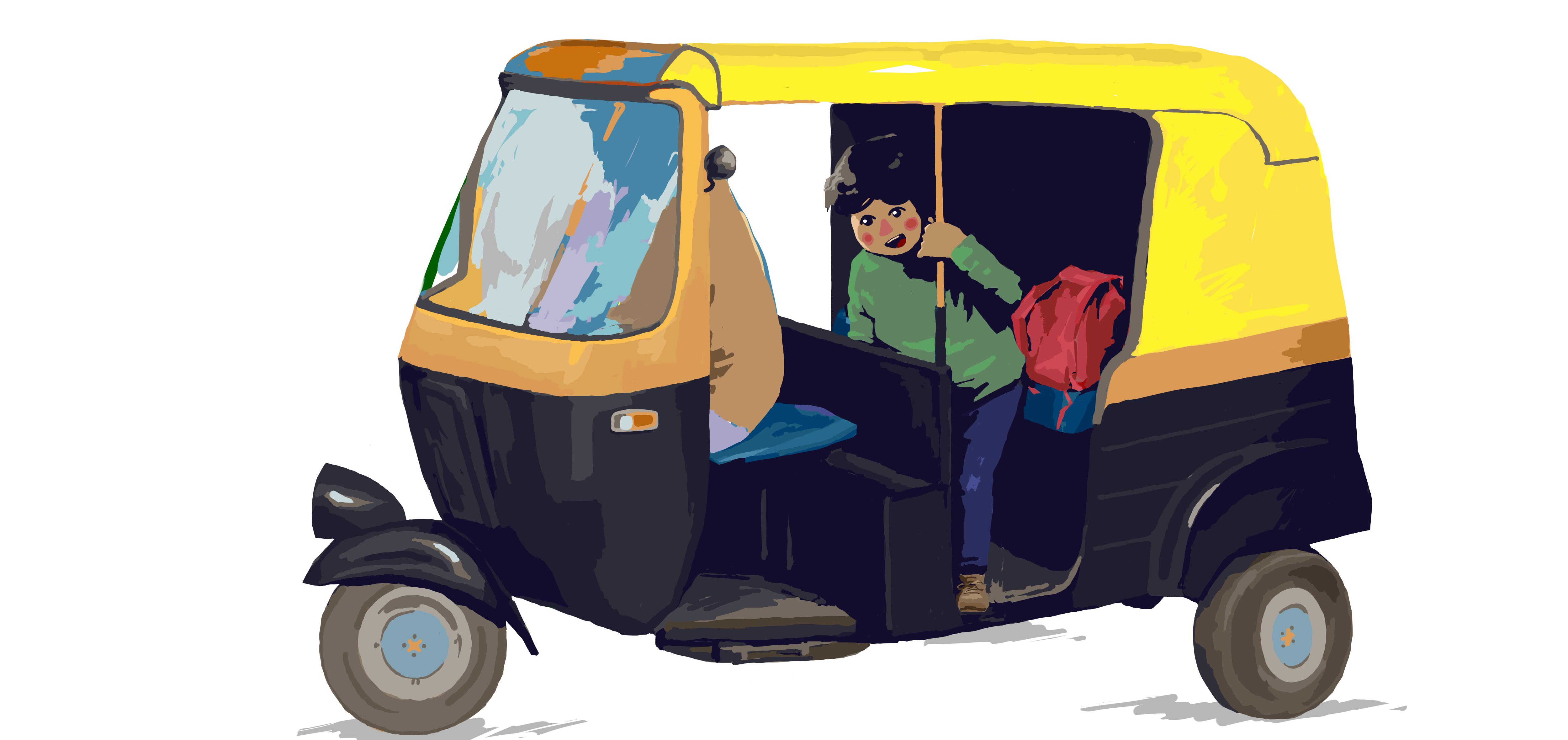
The origin? I started Education Rickshaw while teaching in Sudan, a place where rickshaws—yellow, loud, completely unbothered by road physics—fill the streets like bees in a hive. I loved them immediately. They’re chaotic but purposeful, jolting their passengers over potholes and loose gravel with a kind of reckless determination.
That felt like a perfect metaphor for education: a journey full of lurches, near misses, pendulum swings, potholes, and just enough forward movement to keep you holding on. I wasn’t thinking about branding. I was thinking about survival, reflection, and sounding the alarm on bad ideas. So I named it Education Rickshaw and never looked back.
Just Tell Them
Finally, the one that gets people the most: the title of my book, Just Tell Them.
“Do you really just… tell them?” they ask.
And the short answer is: For novices, at first, yes. And then you recruit them to think with what you’ve told them.
The title is a reaction to a pervasive habit in teaching that goes something like this:
“Does anyone know what egregious means? No? Any guesses? Anyone?”
Or when a student is stuck on a new or tricky problem:
“Just keep trying — you’ll figure it out. Ask three before you ask me!”
There’s this destructive myth that learning is deepest when the teacher withholds explanation and forces students to “discover” meaning. Sometimes encouraging persistence works. But often, kids are asked to construct meaning without the proper foundations. So many ill-conceived lessons – in an effort to adhere to tenets of Progressive Education! – begin as blind fishing expeditions, hoping kids will teach each other instead of the teacher having to do it.
My book argues for a better route: model it clearly, then ask them to think with the models you’ve given them. Explanation is not the enemy of thinking — it establishes the conditions for it.
So… What’s With the Names?
Yes, they’re a bit jagged and occasionally create confusion. But they each reflect a stage in how I evolved as an educator:
- Progressively Incorrect — pushing back against bad ideas disguised as compassion.
- Education Rickshaw — acknowledging that the journey is bumpy, uncertain, and still worth taking.
- Just Tell Them — rejecting the idea that withholding instruction is noble.
If there’s a thread through all of this, it’s that I have no interest in performative branding or vague educational poetry. I care about teaching that actually helps kids learn. The names might be unconventional, but who cares.
Discover more from Education Rickshaw
Subscribe to get the latest posts sent to your email.


 Education Rickshaw