

In this episode of Progressively Incorrect, Zach Groshell and Bradley Arnold discuss "The Classroom Management Field Can't Stop Chasing the Wrong Goal" by Alfie Kohn (@alfiekohn). Brad suggests that in an ideal world progressive ideas of classroom management would be enough, but that we live in the real world. Zach wonders what use it is to live in any other world but the real world, and shares some of the real world strategies he's used for classroom management.


S1E5: Minding the Knowledge Gap by Daisy Christodoulou
Wielding a popular inquiry cycle, Zach attempts to demonstrate that progressive thought encourages teachers to devalue knowledge, while Brad is reminded of (bad) teachers from his education who drilled isolated facts without helping students make connections between the facts.


Teach First, Ask Questions Second
Somewhere along the way I developed the habit of using an unproductive questioning pattern called "guess what's in my head." This is when I ask questions that the students couldn't possibly respond to because they haven't yet learned the material required to answer the questions.


The Sad, Sad Story of the Hollow Curriculum
When I first started teaching 4th grade, I inherited a social studies unit on Ancient Egypt, a topic that is universally adored by students at this age level. Over the years of teaching this unit, the 4th grade teachers had developed a document - what we'd now call a knowledge organizer - of all of … Continue reading The Sad, Sad Story of the Hollow Curriculum


Beliefs, Evidence, and Educational Technology
Frequent readers of this blog will know that I am the Director of Educational Technology at a 6-12 independent school. My role is to design and implement the strategy around online learning and train teachers how to integrate various online tools into their lessons. This post is a reflection on whether my beliefs about teaching … Continue reading Beliefs, Evidence, and Educational Technology


5 Meanings of Student-Centered Instruction
There's an interesting essay called "Five Meanings of Direct Instruction" where the author (Rosenshine, 2008) shows how even a term as commonly used as direct instruction can take on different meanings depending on who you talk to. Some people use it in the pejorative to refer to non-stop passive lecturing, while those familiar with the … Continue reading 5 Meanings of Student-Centered Instruction


Does More Learning Happen When Students are in the Driver’s Seat?
Most teachers will be familiar with Khan Academy, or similar learning programs, that offer a mixture of 1) problems to solve and 2) instructional supports that students can use to learn how to solve the problems. Common instructional supports in online learning environments include partial hints (e.g., click here for a hint to get you … Continue reading Does More Learning Happen When Students are in the Driver’s Seat?

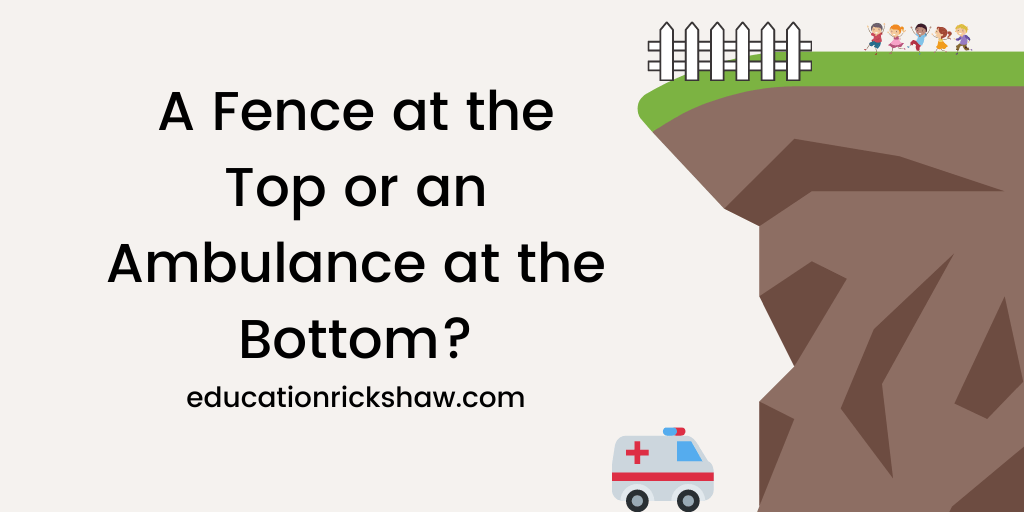
A Fence at the Top or an Ambulance at the Bottom?
As a school leader, I'm often asked to read things that contain strong claims about the nature of learning. I was recently asked what I thought about a blog post by Robert Kaplinsky. I don't know anything about Mr. Kaplinsky, and I don't aim to disparage him or his work, but I was struck by … Continue reading A Fence at the Top or an Ambulance at the Bottom?


Do We Learn Best Collaboratively or Individually?
I read an interesting article about collaboration and worked examples today. Worked examples, for those not in the know, are teaching objects that explicitly show students the steps for how to solve a particular type of problem, such as the one below for how to add fractions: Example of a worked example, shared with me … Continue reading Do We Learn Best Collaboratively or Individually?

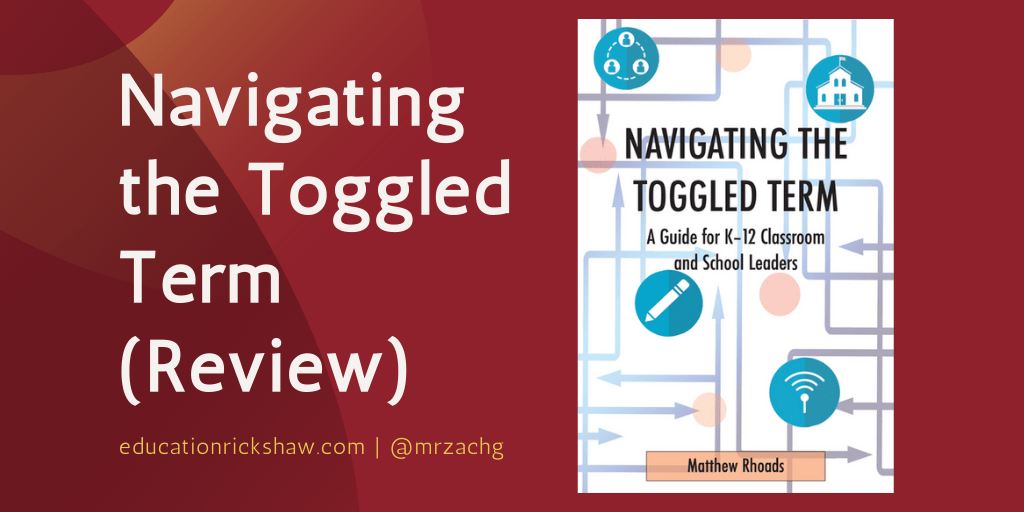
Navigating The Toggled Term (Review)
I was given the opportunity recently to preview a proof of a new book, Navigating the Toggled Term by Matthew Rhoads. Dr. Matt is also one of the lead authors of Amplifying Learning: A Global Collaborative, a book for which I am contributing the chapter on assessment and feedback. Navigating the Toggled Term is a book for teachers who, having … Continue reading Navigating The Toggled Term (Review)

 Education Rickshaw
You must be logged in to post a comment.