

In this episode of the Progressively Incorrect podcast, I talk substitute and supply teaching with Broccoli Guy (real name: Jim Stewart Allen)! Broccoli Guy is a bit of a local celebrity over here in the Pacific Northwest of the United States. Tune in to any of the Seattle sports games, and the probability is high … Continue reading S2E10: Jim “Broccoli Guy” Allen on Substitute Teaching


S2E9: Nate Joseph on Meta-Analysis and the Scientific Principles of Teaching
Somehow, someway, we are already on episode 9 of season 2 of the Progressively Incorrect podcast! Today I have the absolute pleasure of talking with the incredible Nate Joseph, the author of the Scientific Principles of Teaching (check out this page for all his books) Nate is a fan of secondary meta-analysis, a methodology popularized … Continue reading S2E9: Nate Joseph on Meta-Analysis and the Scientific Principles of Teaching

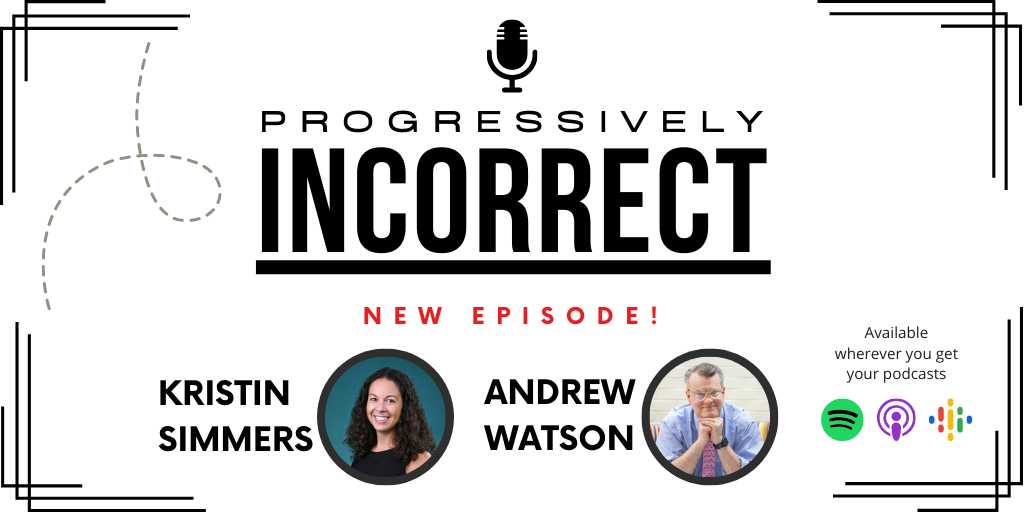
S2E8: Kristin Simmers and Andrew Watson on the Role of Neuroscience in Education
One of my biggest triggers is when a presenter at an education conference will claim, without being able to point to an article or a body of research, that x, y or z is research-based. And more often than not, their research-free claim is accompanied by weird brain-based language. "We know that play-based learning works … Continue reading S2E8: Kristin Simmers and Andrew Watson on the Role of Neuroscience in Education


Dead Ends from the Explicit Teaching vs. Inquiry-Based Learning Debate
I've learned a lot from engaging in the "teaching wars" that pit teacher-led explicit teaching approaches against student-led inquiry (IBL) and discovery (DL) approaches. I even created a podcast to explore these ideas with other teachers and researchers. Recently, however, I've noticed that the conversation tends to circle around the same territories, often leading to … Continue reading Dead Ends from the Explicit Teaching vs. Inquiry-Based Learning Debate


Playing Around with Kids’ Education
As I've written before, replacing explicit instruction (not just lecturing, but a scaffolded combination of interactive modeling, questioning, and practice) with fun but trivial activities is not the key to students' hearts. If anything, this causes disillusionment and resentment. Kids are smart enough to recognize that their education is being wasted. In this post, I'd … Continue reading Playing Around with Kids’ Education


Can Students Really Self-Differentiate?
Take a look at the screenshot below. It shows a learning activity containing a menu with two choices. Clicking the right button leads to a problem that the student must solve, and clicking the left button leads to an example that shows the student how to solve that sort of problem. This activity is one … Continue reading Can Students Really Self-Differentiate?


Do We Want Our Students to Struggle?
Like so many buzzwords in education, it's hard to pin down what people mean by the term "Productive Struggle". Of the two meanings of Productive Struggle I've heard being used most often, the good meaning is uncontroversial, and the bad - and more popular - meaning encourages teachers to abandon principles of effective instruction. The … Continue reading Do We Want Our Students to Struggle?


Making Presentations More Permanent
A problem teachers face when delivering lectures is the issue of "transience." Information is transient when elements of information that must be processed by a learner disappear to be replaced by new elements


Beliefs, Evidence, and Educational Technology
Frequent readers of this blog will know that I am the Director of Educational Technology at a 6-12 independent school. My role is to design and implement the strategy around online learning and train teachers how to integrate various online tools into their lessons. This post is a reflection on whether my beliefs about teaching … Continue reading Beliefs, Evidence, and Educational Technology


Is Working Memory Fixed or Can it be Trained?
Many teachers allow students to play "brain games" as part of the curriculum. When I say "brain games", I'm referring to short - often fun - activities that are unrelated to the core content, but which are thought to engage the mind or make you smarter. When I was a student, if I finished my … Continue reading Is Working Memory Fixed or Can it be Trained?

 Education Rickshaw
You must be logged in to post a comment.